Sovablu is a professional enterprise application platform where AI acceleration and visual development exist at the same architectural level, designed to handle the full complexity of real enterprise systems without writing code. Not an AI tool with a visual layer bolted on. Not a no-code platform with AI introduced as an afterthought. Built from the ground up as a single, unified system where GalaxyONE, Sovablu’s multi-agent AI engine, and professional visual tools work together to deliver what enterprises actually need: complex, governed, production-ready applications. Without developers. Without code.
Lines of code written by your team
From idea to deployed application
Faster time-to-market vs custom development
Faster legacy migration with AI agents
Lower total development cost










Professional-grade no-code tools. Build your interface, data model, and logic visually. Use AI to accelerate at any point.

Give GalaxyONE plain-language requirements, mockups, wireframes, system specs, DB design documents, or legacy code. Its Copilots and agents generate a complete, deployable application. Refine visually.
The UI Designer, Data Designer, and Logic Designer are not simplified editors. They are professional-grade development environments capable of handling the full range of enterprise application complexity, entirely without code.

The UI Designer is a professional drag-and-drop interface builder with a comprehensive library of Smart Components. It is capable of designing, laying out, and delivering any interface that a developer-built application could produce. No frontend code. No CSS configuration. Full layout control at every level.

The Data Designer is a visual database and table design tool. Build the complete relational data model without SQL: tables, columns, data types, constraints, relationships, and indexing. The Data Copilot generates and maintains your tables here, reading table and database design documents and reconciling everything that depends on them.

The Logic Designer is a visual flowchart-based logic environment that handles the full complexity of enterprise business processes. Multi-level approvals, conditional branching, exception handling, cross-system orchestration, scheduled automation, batch processing. Every workflow that would otherwise require a developer can be built, read, and modified here by a qualified business user.
Every GalaxyONE output lands inside the UI Designer, Data Designer, or Logic Designer as fully editable content. Nothing arrives as opaque generated code. Your team retains complete control at every stage. This is what makes enterprise-level complexity achievable: GalaxyONE handles generation and synchronization, the professional tools guarantee precision and ownership.

GalaxyONE is a coordinated engine of Copilots, each responsible for a domain of the build. Every Copilot deploys its own specialized agents, with focused skills like schema design, interface layout, and logic definition. You describe what you need, in plain language or through mockups, wireframes, specs, DB design documents, or legacy code, and the Copilots coordinate the agents to build it.
Holds the whole application together. It coordinates the build across every domain and keeps every part of the solution consistent with the rest, from the first generation to every change after.
Owns the data model. It understands table designs and database design documents, generates and maintains your tables, and reconciles every object that depends on them.
Builds business logic from natural language, from straightforward workflows to complex multi-step enterprise processes. Every output lands in the Logic Designer for your team to refine.
Generates user interfaces from design samples, layout wireframes, application screenshots, or even hand-drawn mockups. Every output lands in the UI Designer, fully editable.
When anything changes, GalaxyONE traces what it affects, raises a review, and shows your team the next action. Data, logic, screens, tests, and documentation stay in sync as the application grows. It also watches tests, documentation, and database performance, raising reviews the moment anything falls out of date.
Sovablu is designed for organizations where business teams, IT, and modernization programs need to move fast without sacrificing complexity, governance, or control.
Business analysts, operations leads, and process owners who understand how enterprise systems work… data structures, process logic, system dependencies… can design, build, and own applications directly. No coding required. No dependency on developers. The people who know the business build the systems that run it.
IT teams retain full oversight. Role-based access, audit trails, infrastructure controls, and security architecture are included by default, not bolted on later. Business teams move fast inside guardrails that IT defines.
Most enterprise modernization programs stall on complexity, cost, and risk. GalaxyONE understands your existing systems, replicates and improves the business logic, and rebuilds it as a cloud-native application in weeks, not years.
Some of the most widely used platforms have mature visual designers but AI as an add-on. AI code generators have generation but no professional visual layer underneath. Sovablu is the only platform that combines both at the same architectural level. That is not a feature distinction. It is an architectural one.
Every capability below is part of the core platform. No add-on modules, no integration fees, no capability tiers.

GalaxyONE generates complete enterprise applications from natural language, mockups, wireframes, specs, DB design documents, legacy code, screenshots, or recordings. All output editable in the visual tools.

Drag-and-drop interface builder with a comprehensive library of smart components. Design visually, refine AI output, or build from scratch.

Visual flowchart-based logic tool. Handles developer-level complexity without scripting: conditions, loops, approvals, error handling, orchestration.
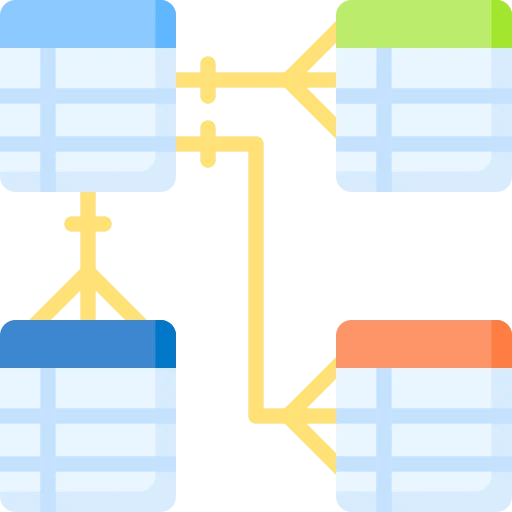
Visual database and table design tool. Build the full relational data model without SQL: tables, columns, constraints, relationships, and indexing. The Data Copilot generates and maintains tables here from existing schemas automatically.
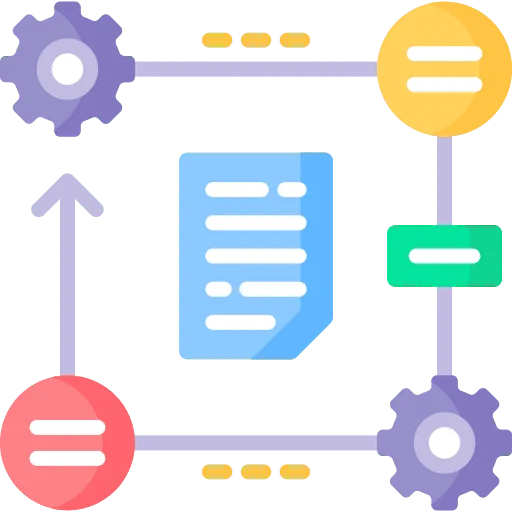
Multi-step approvals, escalations, conditional routing, and cross-team handoffs built directly into any application. Configurable visually in the Logic Designer.

Connect to various external systems, and any system via secure APIs. No paid connectors. No middleware configuration. Open integration architecture.

Deploy any application or update to production with a single click. Roll back to any previous version instantly. No DevOps process required at any stage.
Integrate ChatGPT, Gemini, or custom AI models directly into your applications without code. Use your own data sets for model customization and context.
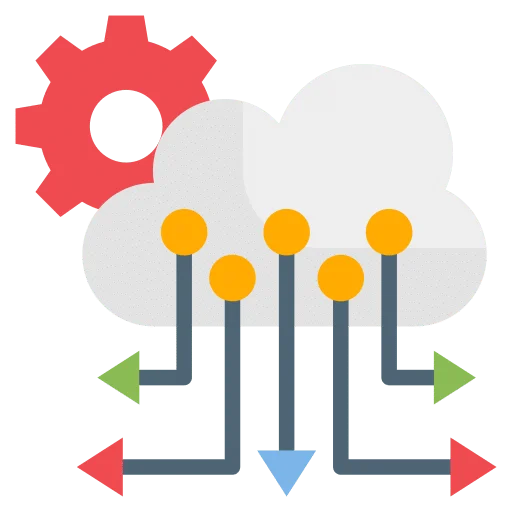
Manage AWS environments, scaling policies, and system configuration from within the platform. No cloud engineering team required for day-to-day operations.

Deploy applications in any language from a single central configuration. No per-language development work. Relevant for global enterprise and multi-region deployments.
Generate complex formatted reports in multiple languages, built directly on your application data. No BI tool integration or separate reporting layer required.
Design batch jobs visually in the Logic Designer and configure scheduled automation. Time-based, event-based, or trigger-based execution. No scripting required.

Track application performance, user activity, and system health from built-in dashboards. Identify and resolve issues before they reach end users.

Every application runs on desktop, tablet, and mobile by default. No separate mobile build. No responsive configuration required at any stage.
Cutting-edge AWS serverless infrastructure. Open data standards. No proprietary formats. Built for global enterprise scale.

Role-based access control, encrypted data at rest and in transit, full audit logs, SSO support, and infrastructure security included in the core platform. Not as add-ons.
Sovablu’s security model is built around a shared responsibility framework across three layers: the AWS cloud infrastructure, the Sovablu platform, and your organization’s applications. Every layer has defined ownership. Nothing is assumed.
Sovablu runs entirely on AWS serverless infrastructure. There are no servers to provision and no capacity to pre-purchase. The platform scales automatically in response to actual demand, handles mission-critical workloads without manual intervention, and charges only for what runs.
Multi-AZ deployment across multiple AWS Availability Zones ensures continuity if any single zone experiences disruption. Your applications stay online without paying for standby capacity you rarely need.
Compute scales to match demand in real time. A spike in users, a batch job, or a global rollout requires no pre-planning or infrastructure changes. Applications maintain consistent performance under any load, without engineering intervention.
You pay for execution time and actual resource consumption. No cost for idle capacity, no penalty for low-usage periods, no over-provisioning to guarantee performance. Infrastructure cost reflects what your business actually does.
Most modernization programs stall because the cost and timeline of rewriting existing systems is prohibitive. GalaxyONE changes that calculation fundamentally. Feed in system documentation, legacy source code, application screenshots, or screen recordings of your existing systems in operation. GalaxyONE reads the business logic, understands the structure, and generates a cloud-native rebuild inside Sovablu, keeping every part of it in sync as your team refines it.
Faster than traditional migration
Not years, to cloud-native
Manual coding needed
Lower total cost of development
Per-user pricing is how legacy platforms monetize adoption. Every new user added to a workflow, every team you onboard, every partner you give access to, triggers another line item on your invoice. Sovablu charges for what your applications actually do. That changes the economics of enterprise-wide deployment entirely.
User-based pricing forces you to pay for named users, whether they are active or not. Sovablu charges only for what actually runs. No dormant licenses. No shelfware. No wasted spend tied to headcount.

In user-based models, every new user increases cost. In Sovablu, usage scales independently of users. Roll applications out to teams, partners, and customers without renegotiating contracts or budgets.

As your application portfolio grows, your cost doesn’t multiply with it. No per-application fees, no tier upgrades, no renegotiation when you expand into new business units or regions.

Costs are tied to application activity, not assumptions. You see exactly where usage comes from and what drives spend. Clearer budgeting and easier governance for IT and finance teams.

Enterprise systems are used by many people across many teams, and enterprise organizations build many applications over time. Sovablu supports both without artificial constraints. No per-user fees. No per-application charges. Growth is not a billing event.
