
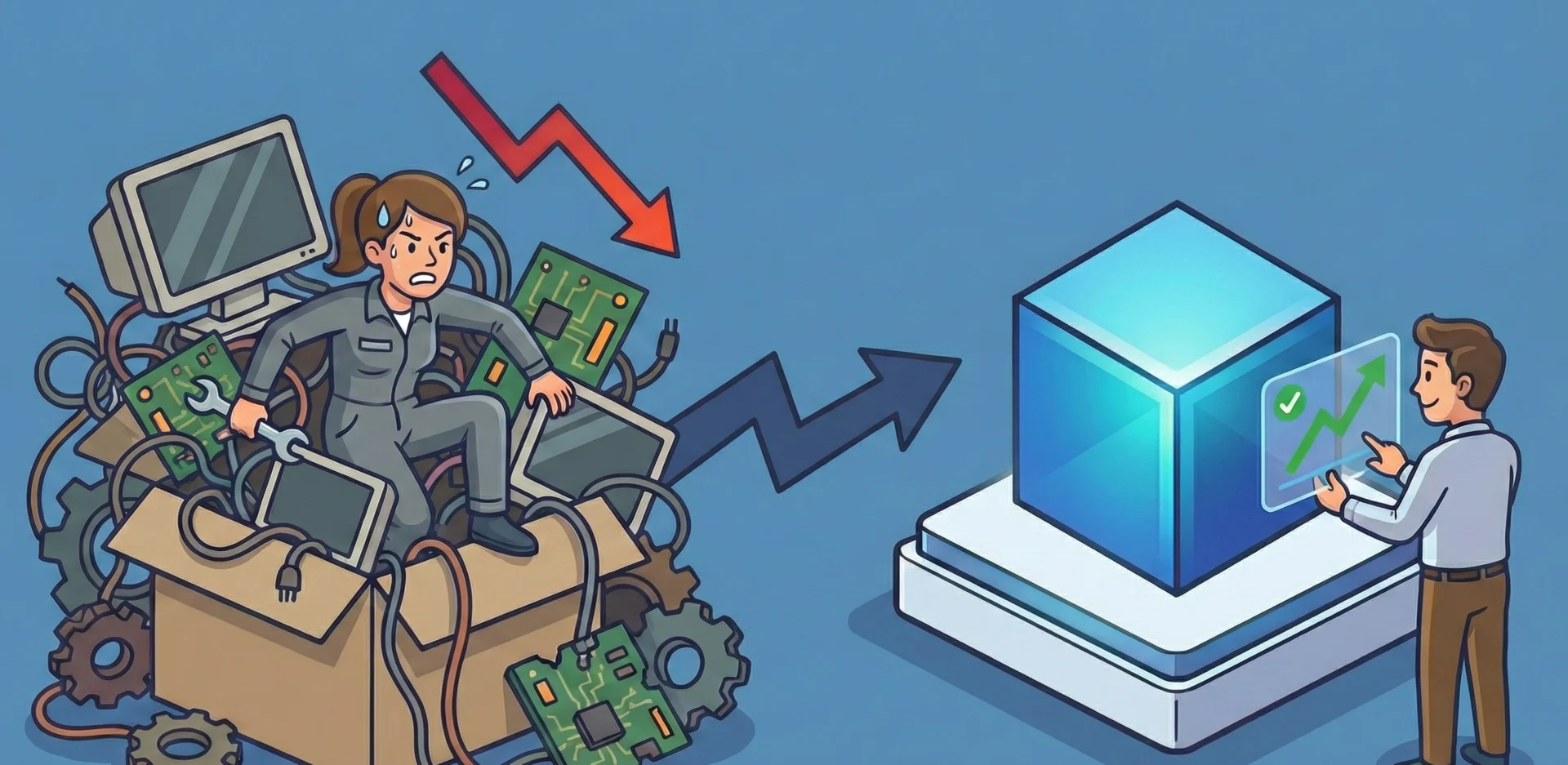

Enterprise application development costs keep climbing, even as tools promise faster delivery. Many organizations invest in new platforms, frameworks, and teams, yet budgets continue to expand and timelines stretch.This is not caused by inefficiency or poor planning. It is structural. The way enterprises build, evolve, and maintain applications creates cost over time, often in places that are not visible during initial development.
To understand why enterprise application cost keeps rising, you have to look beyond build effort and focus on the full lifecycle.
The Real Cost Is Not the First Build
Most discussions about app development cost focus on how long it takes to deliver the first version. That is only a small part of the picture. Enterprise applications live for years. Sometimes decades. The real cost sits in:
- Ongoing maintenance
- Enhancements and change requests
- Dependency on specialized skills
- Platform upgrades and migrations
- Slow response to business change
An application that is cheap to build but expensive to change becomes costly very quickly. This is where many enterprises feel the gap between expectations and reality.
Complexity Multiplies Over Time
Enterprise applications rarely stay static. Regulations change. Processes evolve. Teams reorganize. Data volumes grow. Each change introduces new logic, conditions, and dependencies. Over time, complexity compounds. Even small updates require careful analysis and testing. The effort required to make a change grows faster than the value of the change itself.
This is a major driver of rising enterprise application cost.
Low-Code Reduced Effort, Not Cost Structure
Low-code platforms helped reduce initial development effort. Visual tools and reusable components accelerated delivery for many teams. At the same time, low-code still assumes technical knowledge. Logic expressions, scripting, integrations, and platform-specific behavior remain part of the system. As applications grow, enterprises still depend on specialists to manage and evolve them. The skill set changes, but the dependency remains. Maintenance, upgrades, and coordination continue to consume time and budget.
This is why app development cost often rises again after early gains.
Maintenance Is the Silent Budget Drain
Maintenance rarely appears in business cases with the same clarity as new development. Yet it is often the largest long-term cost. Maintenance includes:
- Fixing issues caused by changes elsewhere in the system
- Updating logic to reflect new policies
- Managing compatibility with platform updates
- Supporting users and handling exceptions
When only a small group understands how an application works, every change becomes expensive. Even when no new features are added, cost continues to accumulate.
Dependency on Scarce Skills Increases Cost
Enterprise application delivery often depends on people with specific technical knowledge. These skills are scarce and expensive. When demand increases, hiring becomes difficult. When people leave, knowledge gaps appear. When priorities shift, queues form. This dependency increases both direct cost and opportunity cost. Projects wait. Business teams delay initiatives. Value is lost while systems stand still.
Reducing this dependency is one of the most effective ways to control long-term cost.
The Cost of Slow Change Is Real
Slow change has a price. It shows up as missed opportunities, manual workarounds, and shadow systems. When teams cannot get changes delivered quickly, they turn to spreadsheets, email workflows, and local tools. These solutions keep work moving but create new risks and hidden costs.
The longer change takes, the more expensive the organization becomes to run.
Why Cost Control Requires a Different Approach
Reducing enterprise application cost is not about pushing teams to work harder or negotiate better contracts. It requires changing how applications are created and evolved. The key shift is removing unnecessary translation layers between business intent and system behavior. When intent is expressed clearly and directly, fewer errors occur. Fewer specialists are needed to interpret and implement changes. Systems remain easier to adapt over time.
This is where no-code changes the cost equation.
How No-Code Lowers the Total Cost of Ownership
No-code platforms are designed to remove dependency on coding skills altogether. Application behavior is defined at a higher level, closer to business language and structure. This creates several cost advantages:
- More people can contribute safely
- Changes require less specialized effort
- Knowledge is easier to share and retain
- Maintenance effort stays predictable over time
When combined with AI-driven methodologies, no-code platforms can interpret intent and generate structured application models automatically. Complexity is handled by the platform rather than exposed to users.
This directly supports a lower cost of ownership with no-code.
Cost Control Is a Strategic Decision
Enterprises that continue to measure cost only at build time will keep seeing budgets rise. Those that focus on lifecycle cost can regain control. This means choosing platforms that:
- Reduce dependency on scarce skills
- Absorb complexity instead of exposing it
- Support change without rework
- Scale without multiplying effort
Cost reduction follows naturally when systems are easier to change.
How Sovablu Fits This Model
Sovablu was designed to address the structural drivers of rising enterprise application cost.
By combining no-code principles with AI-driven application creation, Sovablu allows teams to define applications through intent rather than code. Business teams shape what the system should do. The platform translates that intent into functional applications that are in line with business needs. Visual tools are used to manage and refine applications, not to further enhance technical complexity. This reduces long-term maintenance effort and dependency on specialists. For enterprises building long-term application strategies and roadmaps, this approach supports predictable cost, faster change, and sustainable delivery.
Explore how Sovablu enables a lower cost of ownership with no-code. Request a demo to see how your enterprise can reduce application development and maintenance cost without sacrificing control.